
12 Hacks for Better Balance
We’ve covered these in detail during 2025, here’s your quick and easy summary guide
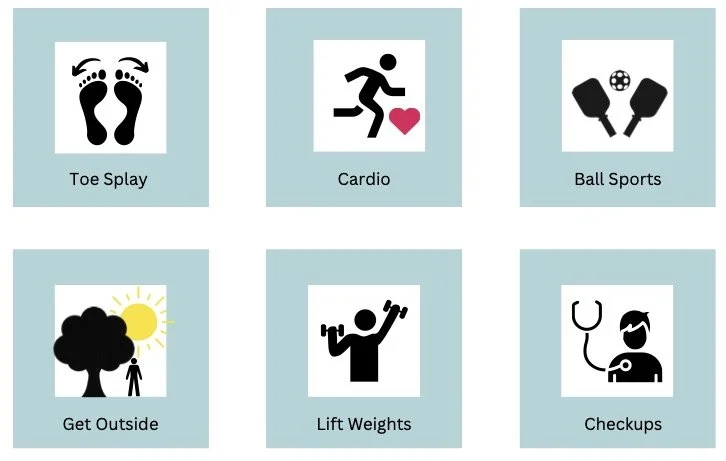
Love Your Feet
Why? Our feet are a vital part of how we literally connect with the world around us. Sedentary lifestyles mean over time we pay less attention to the signals coming in from the soles of our feet. But this can easily be reversed by sensorimotor exercises.
How? Place your feet flat on the floor and pay attention to the feel of the ground under them. Lift your toes and try to splay them out as far as they will go, then grip onto the ground for a few seconds before relaxing. Repeat 3-5 times. This can be done in shoes, though it’s easier barefoot. Even if you aren’t aware of much feeling or much movement at first, simply paying attention and trying to do this exercise has a beneficial effect.
Get Your Blood Pumping
Why? Getting your heart pumping is good for you whole body as it delivers fresh oxygen to muscles and organs, including your brain, which helps you grow stronger, learn new things and slows decline. It can also lower anxiety or depression and help with sleep.
How? There are many ways of getting your heart rate up, so it’s best to choose one (or many) that you enjoy. From brisk walking to biking, dancing or swimming. Before you start, check in with you doctor for the best fit for your current health and fall risk status. Start small and gradually add a bit more on days you feel able to.
Play Ball
Why? Sports that involve catching, hitting or throwing a ball (or other object) are particularly good for balance as they involve all parts of your balance system and frequently require you to be doing two or more things at once. For example, when your opponent hits a ping pong ball towards you, your eyes track where the ball is going and how fast, while you move your body into position, bring your paddle arm back, aiming to hit the ball back. All of these movements on their own challenge your balance system, so when taken together, it’s a powerful combination. Plus, ball sports usually involve other people, so you get a social boost at the same time!
How? There are so many sports to choose from, and even if you’ve never played before, many are welcoming to newcomers. From basket ball to pickleball (one of the world’s fastest growing sports right now), golf to water polo, you’re bound to find something nearby you can try. And if you’re just wanting to practice your hand-eye coordination, you can start by bouncing a ball against a wall or floor and catching it.
Get Outside
Why? Our bodies need vitamin D from sunlight, which combines with calcium from our diet to protect the strength of our bones, amongst other things. Being outside and in different surroundings also gives your eyes and brain new things to look at and pay attention to, which are processes vital to keeping your balance in all environments. Regular practice helps make it easier. In addition, many studies have shown direct health benefits from being outside in nature settings, whether gardens, parks or forests. Benefits include lowered blood pressure, improved mood and lower stress.
How? Check the weather - cold conditions can create hazards like slippery ground or numb your feet, which could put you at higher risk of falling. Take whatever makes you feel comfortable and enjoy the sights and sounds outside in your back yard, or get together with others for a trip to a park. Even ten minutes can make a difference.
Lift Weights
Why? Leg and core strength is vital for balance. After age 40, we lose muscle mass and need to change how we exercise to promote long term health. Weight training is also key for protecting bone strength and reducing bone loss, especially for postmenopausal women, who are at higher risk for osteoporosis. Grip strength is also shown to be an indicator of longevity.
How? If you don’t do much exercise at the moment, start slow and light with bodyweight exercise such as sitting and standing up again. Resistance bands are also a safe way to challenge your muscles and don’t take up much space. It’s a good idea to get personalized advice from a doctor, therapist or exercise trainer who can assess your current level of strength and mobility and show you the correct way to do the exercises most relevant to you.
Get Your Checkups
Why? Problems are always easier and faster to correct when we catch them early, and managing multiple health conditions increases your risk for falling. Changes to our health happen as a part of life, many of which don’t have any symptoms until they’re far advanced. Give your body the gift of a regular check up and go prepared to ask your doctor questions about your balance, health and longevity goals.
How? Most health insurance plans come with an annual checkup built into them. Don’t neglect to get your vision and hearing checked at the same time and get any updates to your prescriptions promptly. Remember to take a list of every medication and supplement you take with you. This is especially important if you see multiple doctors for managing a condition, for example. Some insurance plans will send a trained nurse to your house to conduct the checkup tests, so ask about it if travel to your doctor’s office is difficult for you.
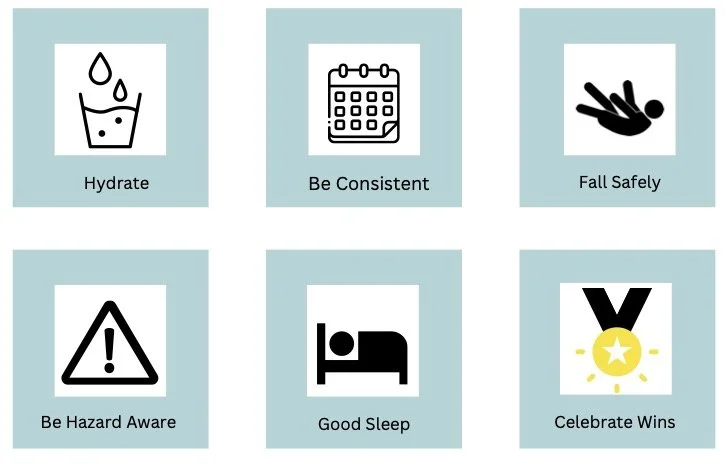
Stay Hydrated
Why? About 60% of the human body is water, every single system needs water to operate well. Being dehydrated decreases muscle strength, alertness and brain function. We exhale water every time we breathe, even in cold weather, so it’s important to drink regularly even when sedentary. As we age, our sense of thirst often isn’t as strong, so it can become easy to forget to drink unless you make it a habit.
How? Make a point of stopping for a drink of water, tea, or your favorite beverage at several points during the day, not just at mealtimes. Remember that caffeine and alcohol will actually dehydrate you as they increase the amount of fluids secreted by the kidneys, so you’ll need to compensate for that if you enjoy them.
Be Consistent
Why? Balance is a skill, and like any other skill, the more frequently you practice it, the better it becomes. And the more consistently you practice the habits which support balance, the easier it will be to keep it strong.
How? It’s better to do 5-10 minutes of balance boosting exercise daily than one big session weekly. Start by building consistency with one of these boosters, and when that’s comfortable, add another. You certainly don’t have to do all twelve to feel the difference!
Fall Safely
Why? While many falls can be prevented, you can prepare yourself for the unexpected by learning how to relax your body and roll to minimize damage if you do take a tumble. Recent research suggests that learning to fall reduces injuries like bone fractures and head injuries. Older adults in the Netherlands who took a course in learning to fall reported greater confidence in going about their daily lives as a result of the course.
How? Find a course near you or speak to a physical therapist who can teach you how to fall, using props and safety mats so you don’t get injured while you learn!
Be Hazard Aware
Why? Awareness is half the battle. If you know a floor is slippery, you’ll step more carefully, or seek help.
How? This can be as simple as pausing when you stand up or enter a room to evaluate what might be in your way, or capable of tripping you up in the environment. You can also turn it into a game when looking at scenes on TV or in magazines. Clutter, loose or missing handrails, small pets, poor lighting, spills on the floor, items too high up to reach easily can all cause a fall. See if you can spot any in your own home and make a plan to get them cleared away.
Get Good Sleep
Why? Your brain needs 7-9 hours of good sleep, including periods of deep sleep and REM sleep (when you dream) to function at its best. During sleep your brain consolidates learning, clears up the clutter and gets your body ready for the next day. Missing out on it, even for one night, has a measurable negative effect on your balance ability the next day.
How? Normalize sleep as an essential health habit. Keep your sleeping area cool and dark, and try to have a consistent schedule for sleeping and waking. Research has shown that exposure to natural early morning and late afternoon light can be helpful in setting your sleep-wake cycle. For a fuller exploration of sleep tools read this article.
Celebrate Wins
Why? Changing a habit can be hard work. Consciously noticing the things we’ve done well, or the good outcomes helps keep our motivation going. After all, good balance is the foundation skill for so many other good things in life.
How? Each day or each week, make a note of something positive about your balance journey. From ‘I did my workout today’ to ‘I felt stronger’ or ‘I tried something new and decided it wasn’t for me’ all count. Write them in a notebook, on a board, or collect them in a jar. At the end of the month reread them and remind yourself of what you’ve done! Then give yourself a reward. You can also keep track of how your physical balance is changing if you have access to or own a Zibrio Stability scale. This can help you identify the habits that make the difference to your balance.